
Why does siding get damaged in Wichita?
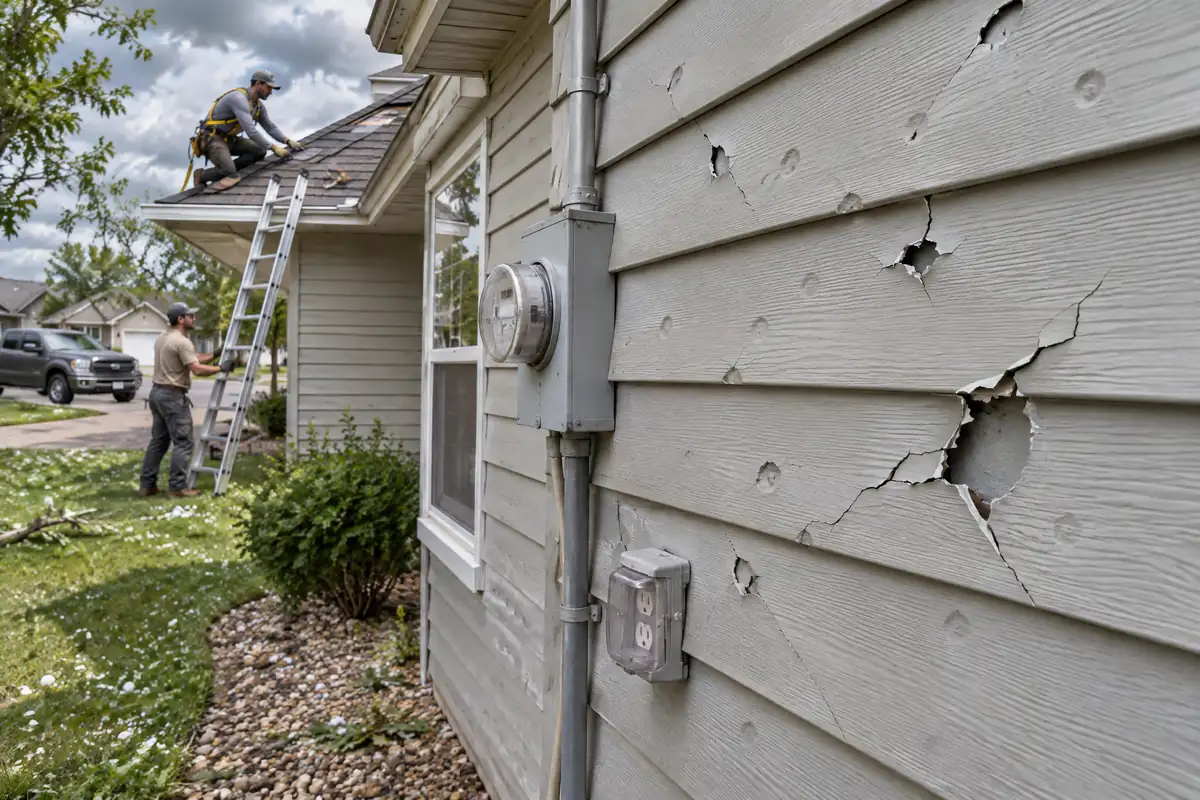
Siding takes the sideways part of every storm. Hail driven by wind hits the walls facing the storm, often the west and north sides of the house, and cold vinyl cracks easily. Straight-line winds can unzip vinyl panels from the bottom course up. Over time, sun fades and warps cheaper panels, while woodpeckers, lawn equipment and failed gutters cause their own damage. Because the roof and siding are usually hit by the same storm, many roofing companies in the area handle both.
What are the signs your siding needs repair?
- Cracks, holes or chips, especially on the side of the house that faced the storm.
- Panels that are loose, buckled or missing.
- Warping or bulging, which can mean moisture behind the siding.
- Dents in aluminum or steel siding.
- Soft or swollen wood siding and trim, peeling paint or mildew lines.
- Gaps around windows and doors where the trim meets the siding.
How does siding repair work?
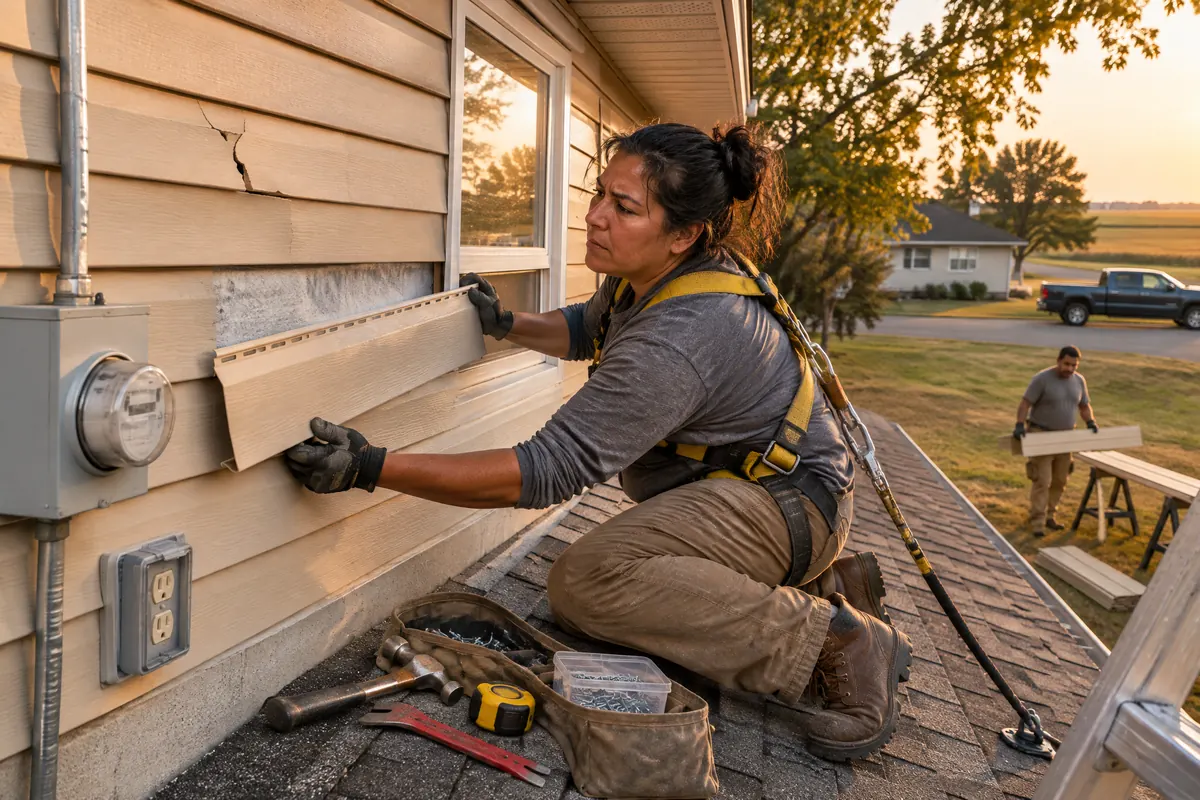
For vinyl, the installer uses a zip tool to unlock the panels above the damage, removes the broken pieces, checks the house wrap and flashing underneath, and locks new panels into place. Fiber cement boards are cut out and replaced, then caulked and painted. Wood siding may need the damaged boards replaced and the surrounding area primed and painted. Where water has got behind the siding, the sheathing may need repair before new siding goes on.
The most important check happens before the new siding goes up: making sure the weather-resistant barrier and the flashing around windows and doors are intact. That is what keeps water out of the wall.
Which siding material holds up best?
| Material | Hail and impact | Upkeep | Repair notes |
|---|---|---|---|
| Standard vinyl | Can crack when cold | Low | Easy to replace panels, color matching is the challenge |
| Insulated vinyl | Better than standard | Low | Thicker profile, check availability |
| Fiber cement | Good | Repaint every several years | Cut, replace, caulk and paint |
| Wood | Dents and splits | Highest | Board replacement plus paint |
| Steel or aluminum | Dents | Low | Matching older profiles can be hard |
What affects the cost and time?
- The material and whether a matching profile and color are still made.
- How many panels or walls are damaged.
- Damage to the house wrap, sheathing or window flashing behind the siding.
- Height, landscaping and access.
- Painting for fiber cement and wood.
Small patch repairs can be done in a few hours. Residing whole walls takes longer.
How should you prepare?
- Photograph the damage on every wall, with the date, before any repair.
- Look for any spare siding left in the garage or attic by the builder. It can solve the matching problem.
- Move outdoor furniture and protect plants along the walls being worked on.
When is siding damage urgent?
When panels are missing and the wall sheathing is exposed to rain, or when a loose panel is flapping and likely to tear more off in the next wind. A temporary cover keeps water out of the wall until permanent repairs are done. If hail caused the damage, have the roof checked too through our hail damage service.
Questions people ask
Can a roofer repair siding too?
Many Wichita roofing companies also repair and replace siding, because hail and wind damage the two together. Ask on the call whether the roofer you are connected with handles your siding type.
What if my siding color is discontinued?
Matching is the hardest part of siding repair. Options include salvaging panels from a less visible wall, using the closest current match, or residing a full wall. Some insurance policies address matching, so check yours.
Does hail damage vinyl siding?
Yes. Cold, brittle vinyl can crack or get punched through by large hail, and the north and west walls often take the worst of it, depending on the storm.
How do I know if water is behind my siding?
Warped or swollen panels, peeling interior paint on exterior walls, musty smells and soft spots near windows are common signs. A contractor may remove a few panels to check the wrap and sheathing.
Is fiber cement better than vinyl for hail?
Fiber cement is generally more impact-resistant than standard vinyl, but it costs more and is heavier to install. Thicker insulated vinyl also performs better than thin builder-grade panels.