
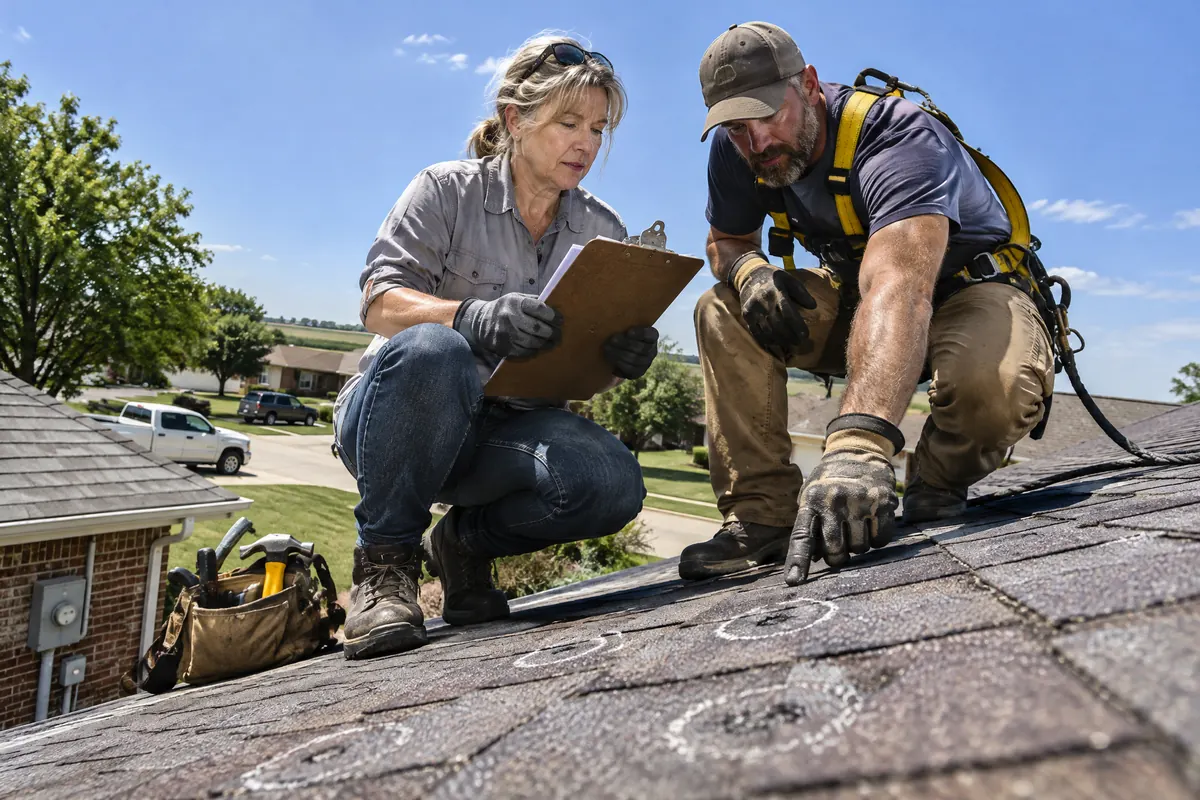
Most Kansas homeowners file a roof claim at some point, usually after hail. The process is not complicated, but the words in a policy can be, and a few choices early on make a big difference to what you end up paying out of pocket. This guide explains how a typical claim runs and what the common terms mean. It is general information, not legal or insurance advice. Your own policy is what counts, so keep it handy and ask your agent when in doubt.
Step 1: Document the damage
Before anything is cleaned up or repaired, take dated photos of everything the storm touched: dented gutters, vents, AC fins, broken shingles in the yard, interior stains and any hailstones next to a coin or ruler. Note the date and time of the storm. If water is coming in, take reasonable steps to stop further damage, such as tarping or moving belongings, and keep receipts. Most policies expect you to prevent further damage once you know about it.
Then get a roof inspection. A roofer's report with photos of each slope, test-square counts and damaged soft metals gives you an independent record to compare with the adjuster's findings. Our after-hail checklist covers what you can document yourself.
Step 2: Notify your insurer
Call your agent or your insurer's claim line, or use its app. Give the date of the storm, what you have seen and whether water has entered the house. You will get a claim number. Write it down and use it in every message from then on. Ask the insurer what documents they want and how long the adjuster visit usually takes to schedule. After a large Wichita storm, adjusters can be booked out for weeks.
Step 3: Meet the adjuster
The adjuster inspects the roof and the rest of the property and writes an estimate. It helps to have your roofer there, so they can point out damage and discuss repair methods directly. Share your photos. Ask the adjuster what they found on each slope, and whether they are treating any damage as cosmetic.
Step 4: Understand the estimate and the payments
Your payout depends mainly on three things.
Your deductible
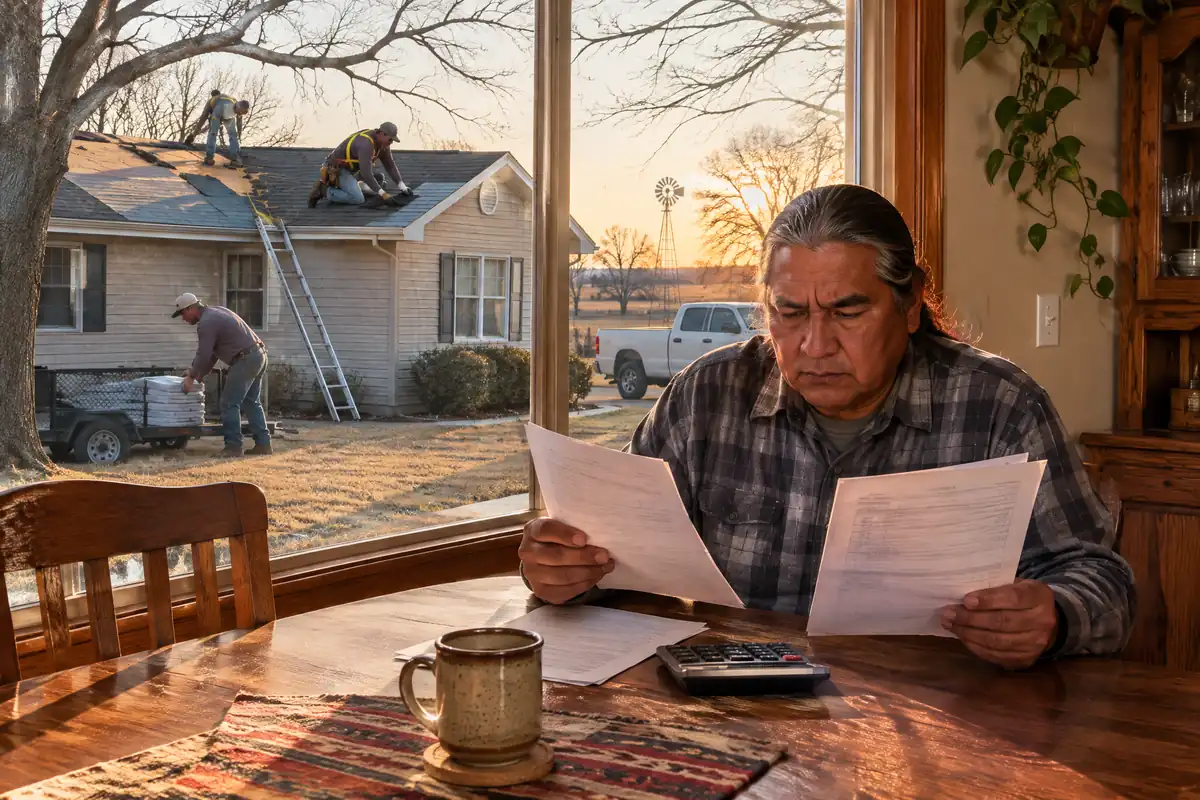
This is the part of the loss you pay. Many Kansas policies have a separate wind and hail deductible, which may be a flat amount or a percentage of your dwelling coverage. A 1 or 2 percent deductible on a home insured for a few hundred thousand dollars can be several thousand dollars, so check yours before you need it.
Actual cash value or replacement cost
| Actual cash value (ACV) | Replacement cost value (RCV) | |
|---|---|---|
| Basis | Replacement cost minus depreciation | Full cost to replace with similar materials |
| First payment | The depreciated amount, minus deductible | Often the depreciated amount first, minus deductible |
| Second payment | Usually none | Withheld depreciation, paid after work is completed and proven |
| Effect on older roofs | Payout can be much lower than the cost of a new roof | Payout tracks actual cost if you finish the work |
Exclusions and endorsements
Some policies exclude cosmetic damage, such as dents in metal roofing or gutters that do not affect function. Some limit coverage for older roofs to actual cash value. Some include code upgrade coverage, which can pay for items required by current building code, such as ice and water shield, when the roof is replaced. Ask your agent which of these apply to you.
Step 5: Do the work and close the claim
Hire a registered roofer, get a written contract that matches the scope in the insurance estimate, and make sure the permit is pulled. In Wichita and unincorporated Sedgwick County, MABCD issues roofing permits, while suburbs and other counties start at their own city or county office. When the work is done, send your insurer the final invoice and any photos or paperwork they need to release withheld depreciation on a replacement cost policy. Keep copies of everything.
If the roofer finds hidden damage during tear-off, such as rotted decking caused by the storm leak, they should document it with photos so it can be submitted as a supplement to the claim.
What should you watch out for?
- Contracts signed on the doorstep. Read anything before you sign it, especially documents that assign your insurance benefits or let a contractor deal with your insurer for you.
- Unregistered roofers. Every roofing contractor working for pay in Kansas must be registered with the Attorney General. See our registration guide.
- Offers to cover your deductible. Ask your agent about any offer to waive or absorb your deductible before you agree to it, because it can create problems with your claim.
- Large up-front payments. A reasonable deposit for materials is common. Paying in full before work starts is risky.
Where can you get help with a claim dispute?
Start with your agent and the adjuster, and ask for a re-inspection if you disagree. Check whether your policy has an appraisal clause. The Kansas Insurance Department handles consumer complaints and questions about how insurers treat claims, and its website explains how to contact it. For complex disputes, some homeowners speak to an attorney.
Questions people ask
How long do I have to file a roof claim in Kansas?
It depends on your policy. Most require prompt notice of a loss, and some set a specific window. Read the conditions section of your policy or ask your agent, and do not wait for the next storm.
Will filing a hail claim raise my premium?
It can, depending on your insurer and claim history. Weather claims are treated differently from other claims by some insurers. Ask your agent before filing if you are unsure, but do not let a damaged roof go unrepaired.
What if the adjuster misses damage?
Ask for a re-inspection, ideally with your roofer present, and share your dated photos and the roofer's report. If you still disagree, your policy may describe an appraisal process. The Kansas Insurance Department also takes consumer questions.
Can my roofer talk to my insurance company?
A roofer can share findings and photos and meet the adjuster on site. In Kansas, negotiating a claim on your behalf is regulated, so read carefully any document that assigns your claim or lets a contractor act for you.
Do I have to use the roofer my insurer recommends?
Generally you can choose your own qualified contractor. Make sure whoever you choose is registered with the Kansas Attorney General and gives a written estimate.