
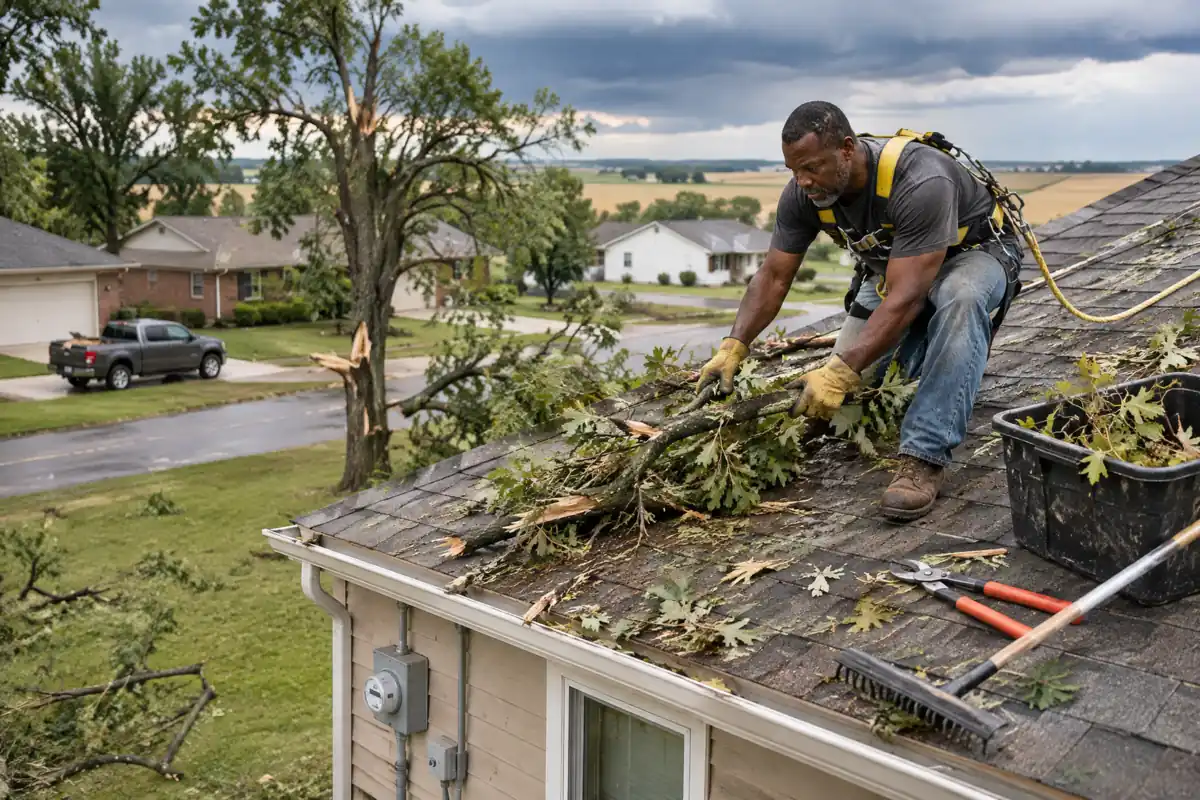
What counts as a roofing emergency?
A roof emergency is any damage that lets water or weather into the house right now, or will the next time it rains. In Wichita that usually means one of these:
- Wind has stripped shingles and underlayment off a section, leaving bare decking.
- A tree limb has punched through the roof, often after a thunderstorm or an ice storm.
- Large hail has broken a skylight or cracked through shingles.
- Water is running from a light fixture, down a wall or through the ceiling.
- Flashing or a roof vent has torn loose and is flapping or open.
If the issue is a slow stain that has been there for weeks, it is still worth fixing soon, but a scheduled roof repair is usually the better fit.
What should you do first, before anyone arrives?
- Get safe. If a ceiling is sagging with water, keep everyone out of that room. If water is near outlets or fixtures, turn off that circuit at the breaker.
- Call 911 for danger. Downed power lines, a gas smell, fire or an injury come before any roof work.
- Catch the water. Buckets, towels and plastic sheeting. Poke a small hole in a bulging ceiling only if it is safe to do so and a bucket is under it, which can stop the drywall collapsing.
- Move valuables. Electronics, documents and furniture away from the leak.
- Photograph everything inside and outside, with the date, before cleanup starts.
- Stay off the roof. Storms leave shingles wet, debris loose and footing uncertain.
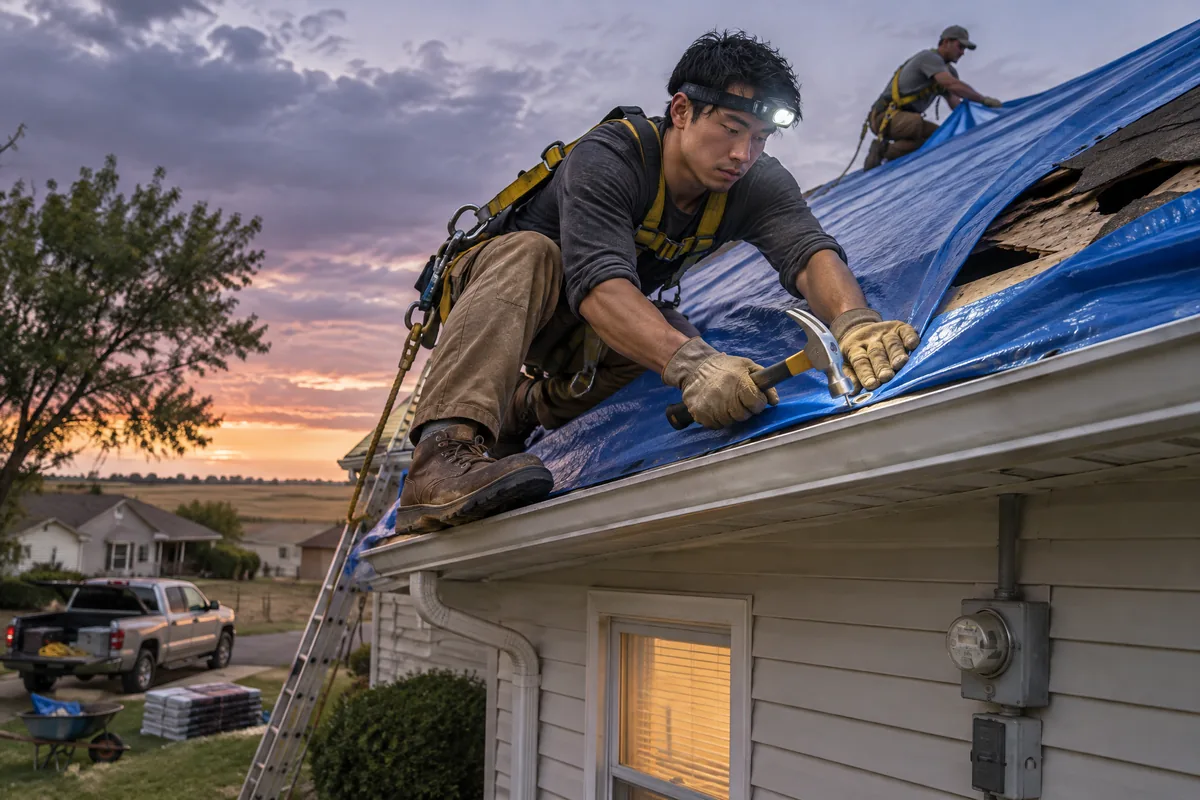
How does emergency tarping work?
The roofer clears debris from the damaged area, checks how far the opening runs, and lays a heavy-duty tarp that extends past the damage and over the ridge where possible, so water cannot run underneath from above. The edges are secured with wood battens screwed through the tarp rather than nails alone, because Kansas wind gets under loose edges quickly. Small punctures are sometimes sealed with a temporary patch instead.
The goal is to keep the house dry until a permanent repair or replacement can be done in decent weather. A tarp is not a repair, and it is not meant to stay on through a season.
Emergency visit or scheduled repair?
| Emergency call-out | Scheduled repair | |
|---|---|---|
| When to choose it | Water entering now, roof open, storm forecast | Old stain, minor missing shingles, no active leak |
| What gets done | Tarp or temporary patch, debris removed, damage photographed | Permanent repair with matched materials |
| Cost | Often higher for nights, weekends and storm peaks | Standard rates |
| Follow-up | Permanent repair or replacement needed | Usually none |
What affects the cost of emergency roof work?
The size of the opening, how high and steep the roof is, the time of day, and how much debris has to be cleared all change the price. A tarp over a small section of a single-story ranch is a very different job from securing a torn-open second-story roof in the rain. Ask the roofer for the call-out charge and the tarping price on the phone, before they come out.
What happens after the emergency?
Once the house is protected, the roofer can do a full inspection in daylight and dry weather. If the damage came from a storm, that inspection report and your photos go to your insurer. Our roof insurance claim guide covers what to send and what to expect from the adjuster. For hail specifically, see hail damage roof repair.
Questions people ask
How fast can someone tarp my roof?
It depends on the time, the weather and how many homes were hit. After a large storm, demand across Wichita spikes. Say clearly that water is entering the house, and ask the roofer for a realistic arrival window.
Will insurance pay for emergency tarping?
Many homeowner policies expect you to take reasonable steps to prevent further damage, and the cost of those steps is often included in the claim. Keep the invoice and photos, and confirm with your insurer.
How long can a tarp stay on a roof?
A well-secured tarp is meant to buy days or a few weeks, not months. Kansas wind and sun wear tarps out quickly, so book the permanent repair as soon as you can.
Can I tarp the roof myself?
It is not recommended, especially when the roof is wet, steep or still in high wind. If you must protect belongings, work inside: move items, catch drips and turn off power to any wet fixture at the breaker.
Is a roofer the right call if a tree fell on my house?
If the tree is still resting on the roof, you may need a tree service first, and a structural engineer if framing is broken. Call 911 if anyone is hurt, there is a gas smell, or power lines are down.