
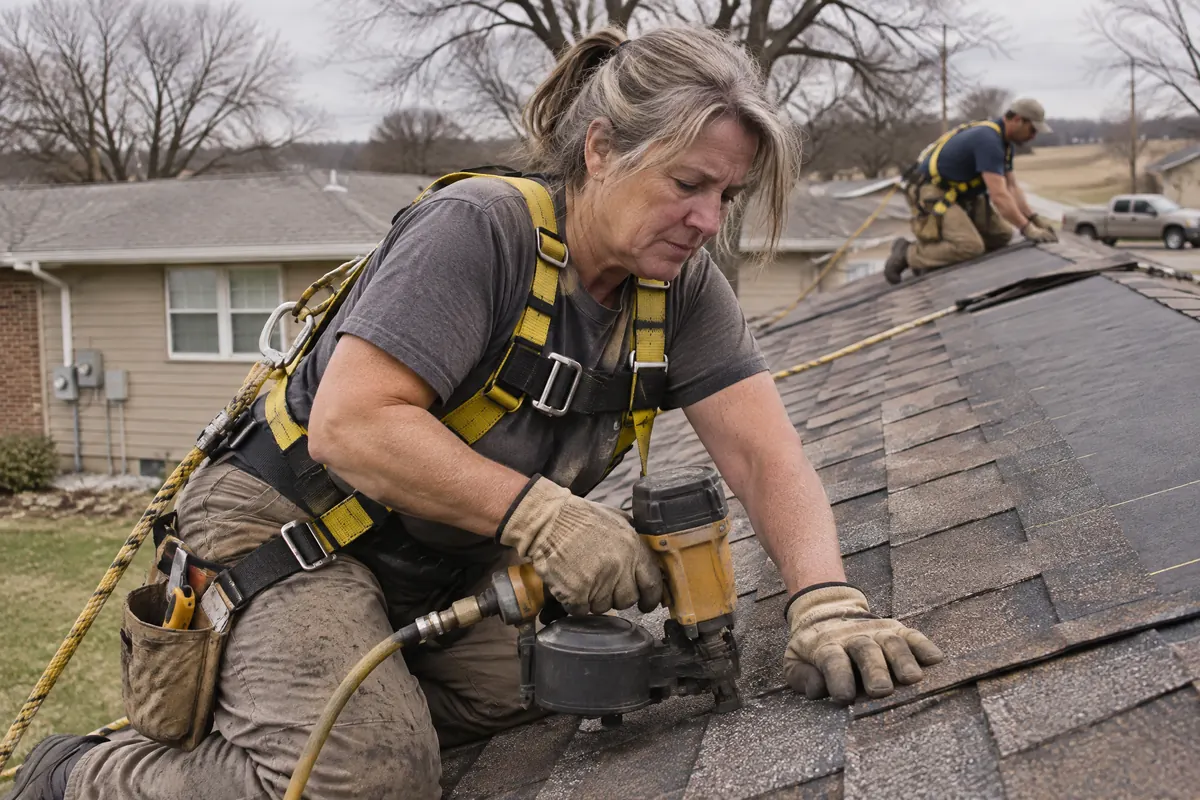
How old are the roofs in Derby?
Derby's housing tells the story of the city. After World War II, thousands of modest homes were built for military families tied to what is now McConnell Air Force Base, about 9 miles north, and many of those 1950s ranches still line the streets on the west side of town. To the east, Derby kept growing, and much of the newer housing stock sits off Rock Road and beyond. Real estate data shows more than a third of Derby's homes were built in 2000 or later, alongside a large group from the 1940s to 1960s.
That split matters for roofing. The older west-side homes are more likely to have plank decking, older ventilation, and past repairs that were patched rather than fixed. The newer east-side homes usually have plywood or OSB decking and simpler rooflines, but many were built with basic builder-grade shingles that do not hold up as well in hail as impact-rated products.
What roofing work do Derby homeowners call about most?
- Hail inspections, since storms crossing south Sedgwick County often track over Derby.
- Full replacements on 1950s ranches, sometimes with decking and ventilation upgrades.
- Wind damage to shingles on the open edges of newer subdivisions.
- Gutter and downspout replacement after hail dents them.
- Upgrades to Class 4 impact-rated shingles when a roof is replaced. See our Class 4 guide.
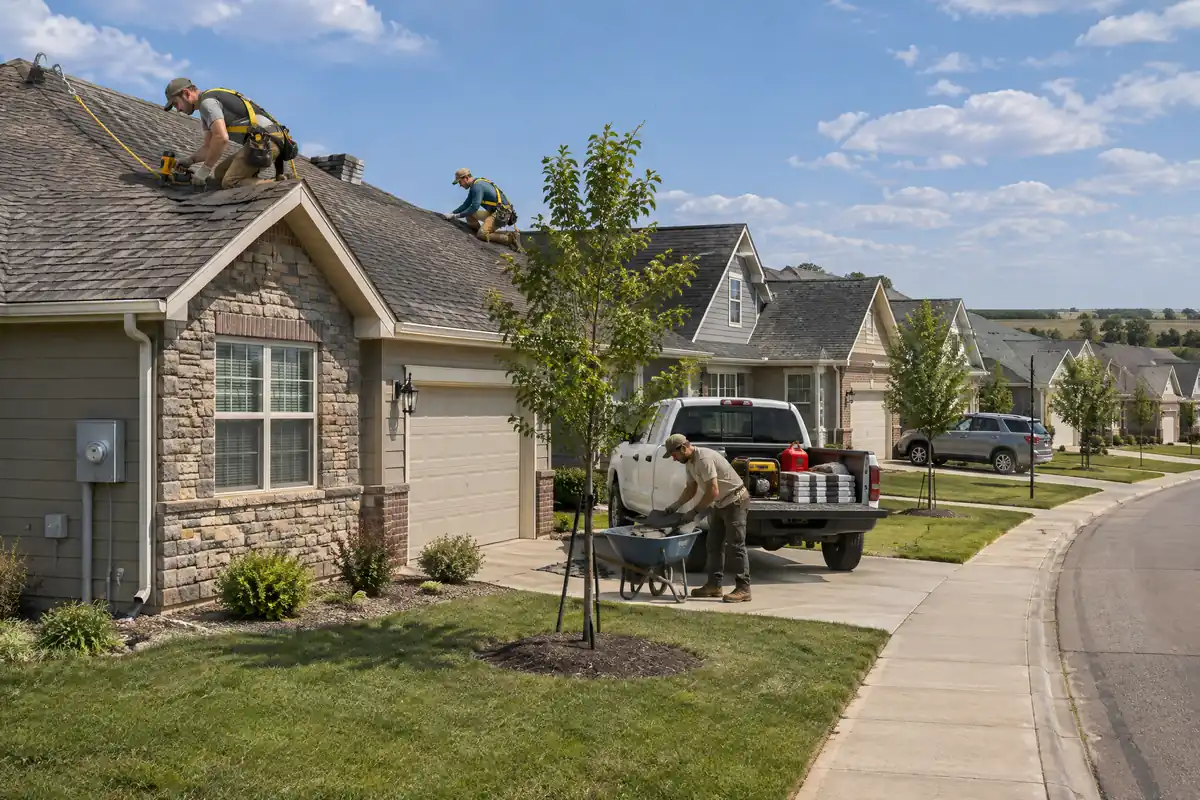
How do permits work for a reroof in Derby?
Derby is one of the Sedgwick County cities that runs its own permitting, through its Building Trades and Inspections department. The permit starts with the city. A roofer who works in Derby regularly will know the process. If someone offers to skip the permit to save money, treat that as a warning sign, because an unpermitted roof can cause trouble when you sell or file a claim.
Whoever you hire must also hold a Kansas roofing registration from the Attorney General. You can look it up in a minute. Our registration guide shows where.
What should you check after a storm in Derby?
Look at the things that dent easily: metal roof vents, gutters, downspouts, the fins on your air conditioner and any window screens on the side the storm came from. Then check the ceilings and the attic. If you see dents or shingle granules piled at the bottom of a downspout, call for an inspection, even if nothing is leaking. Take photos with the date before any cleanup, in case you file a claim.
Where in Derby do the roofers work?
All of it, from the older blocks near the original town center, first platted as El Paso in 1871, to the neighborhoods around Rock River Rapids off Rock Road and the newer streets on the east side. If you are just over the line in unincorporated Sedgwick County, the permit goes through MABCD instead, but the roofer you reach will be the same.
Questions people ask
Who issues roofing permits in Derby?
Derby has its own Building Trades and Inspections office. Permits in Derby start with the city, not with Wichita's MABCD. Your roofer should pull the permit and schedule any inspection.
Is my 1950s Derby house likely to need decking repairs?
It is common. Homes that age often have board decking, old repairs and sometimes more than one layer of shingles. A roofer can usually tell from the attic before quoting, and will price any extra decking separately.
Do newer Derby homes need roof inspections too?
Yes. Hail does not care how old a roof is. Newer shingles resist hail better than old brittle ones, but large stones can still bruise or crack them, and builder-grade roofs are often a basic shingle.
How far is Derby from Wichita for a roofer?
Derby is about 11 miles south of downtown Wichita by K-15, so roofers based across the metro commonly work there.