
When should you book a roof inspection?
There are four good moments, and Wichita homeowners tend to hit all of them sooner or later:
- After a storm. Any hail around an inch or bigger, or wind strong enough to bring down limbs, is reason to check. Damage that causes no leak today can shorten the roof's life.
- Before buying a home. A roof is one of the most expensive parts of a house to replace, and its condition can change what you offer.
- Before selling. Knowing the roof's condition up front avoids surprises after the buyer's inspection.
- When something seems off. A stain, a draft, granules in the gutters or a shingle in the yard.
What does a roofer check during an inspection?
| Area | What they look for |
|---|---|
| Shingles or panels | Hail hits, granule loss, cracking, curling, lifted tabs, missing pieces |
| Flashing | Rust, gaps or failed sealant at chimneys, walls, skylights and valleys |
| Penetrations | Cracked pipe boots, loose vents, damaged exhaust caps |
| Edges and gutters | Drip edge, fascia rot, sagging or dented gutters, granule build-up |
| Decking | Soft spots, sagging between rafters |
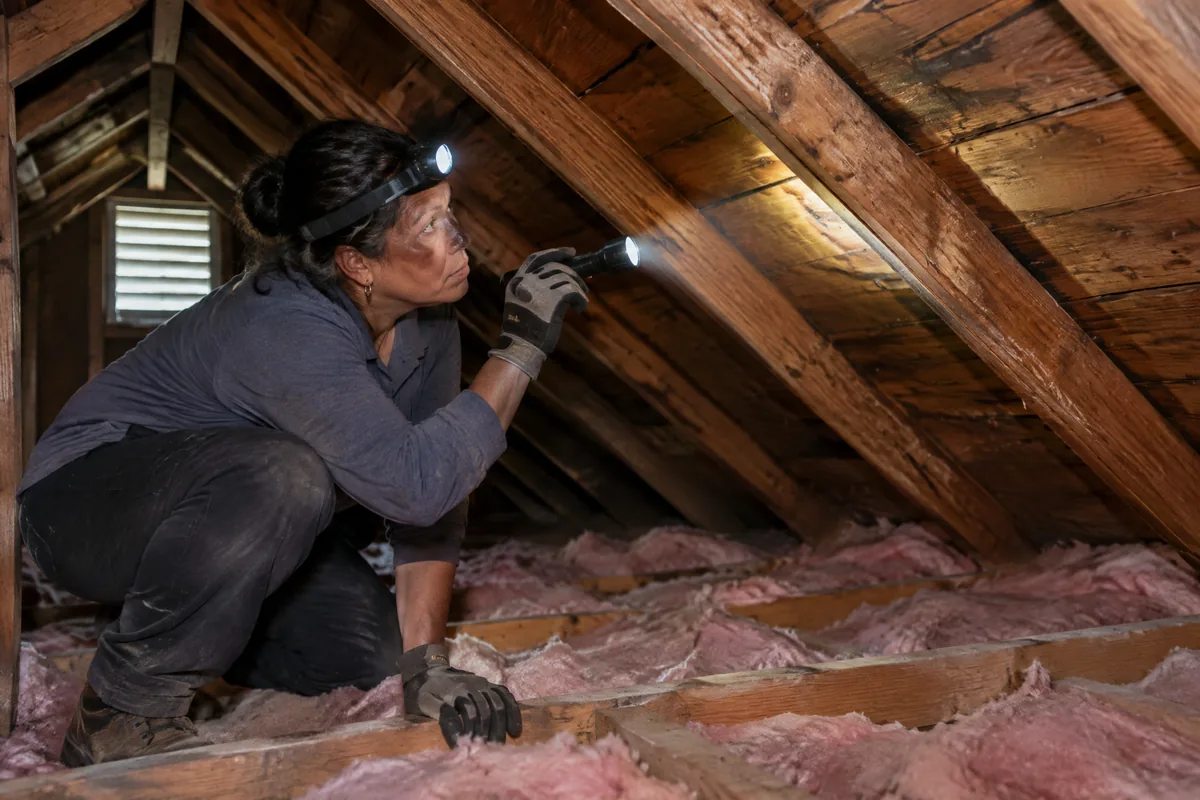
| Attic | Water stains, daylight, mold, insulation condition, intake and exhaust ventilation |
How is the inspection done?
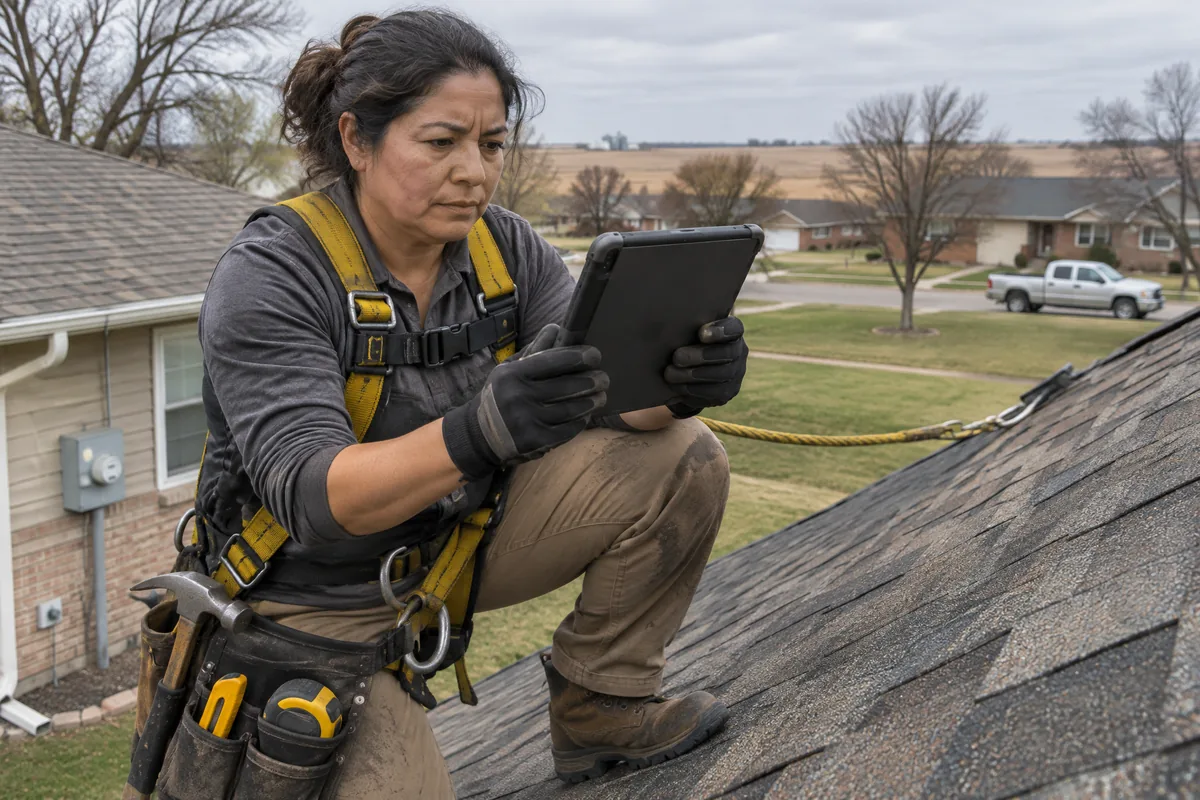
Most roofers start outside with a walk around the house, looking at the roof lines, gutters, downspouts and siding for clues such as dents or missing pieces. Then they go up. On a walkable roof, they check each slope in turn, test suspicious shingles by hand and photograph what they find. After a storm, they may chalk test squares and count hits. Many finish in the attic, because water stains, rusty nails and daylight tell you things the surface does not.
At the end you should get a clear answer: the roof is fine, it needs specific repairs, or it is at the point where replacement makes more sense. If someone tells you a roof needs replacing, ask them to show you why on the photos.
What affects the cost and time of an inspection?
Roof size, pitch and height are the main factors, along with whether you need a formal written report for a sale or a claim. Steep and multi-story roofs take longer. Drone inspections can be quicker on roofs that are unsafe to walk. Many inspections on a typical single-story home are done within an hour.
How do you prepare for an inspection?
- Make sure the roofer can reach the attic hatch. Clear the closet shelf if that is where it is.
- Unlock side gates and secure pets.
- Have the roof's age and any past repair or claim paperwork ready, if you have them.
- Write down the date of any recent storm and where you have seen leaks or stains.
When is an inspection urgent?
If there is active water coming in, skip the inspection queue and ask for emergency roof repair. If a big hailstorm just went through and you may be filing a claim, try to get the inspection done promptly so the damage is documented close to the storm date. Our after-hail checklist covers what you can look at from the ground first.
Questions people ask
Are roof inspections free?
Some roofers offer free inspections, especially after storms, and some charge a fee, particularly for written reports for a home sale. Ask on the call so you know before anyone climbs up.
How often should a Wichita roof be inspected?
Once a year is a sensible habit, ideally in spring before storm season, plus after any storm with large hail or high wind. Older roofs benefit from more frequent checks.
Is a home inspector's roof check the same as a roofer's inspection?
Not quite. Many home inspectors look at the roof from the ground, a ladder or a drone. A roofer typically walks the roof and checks the details that decide whether a repair or replacement is needed. For a purchase, it can be worth having both.
What will I get after the inspection?
Usually photos and a summary of what was found, with recommendations. Ask for it in writing, with dated photos, especially if you might file an insurance claim.
Can a roofer inspect a roof that is too steep to walk?
Yes, using safety equipment, a ladder at the eaves or a drone. Steep or very high roofs may take longer or cost more to inspect.