
What does a roof repair involve?
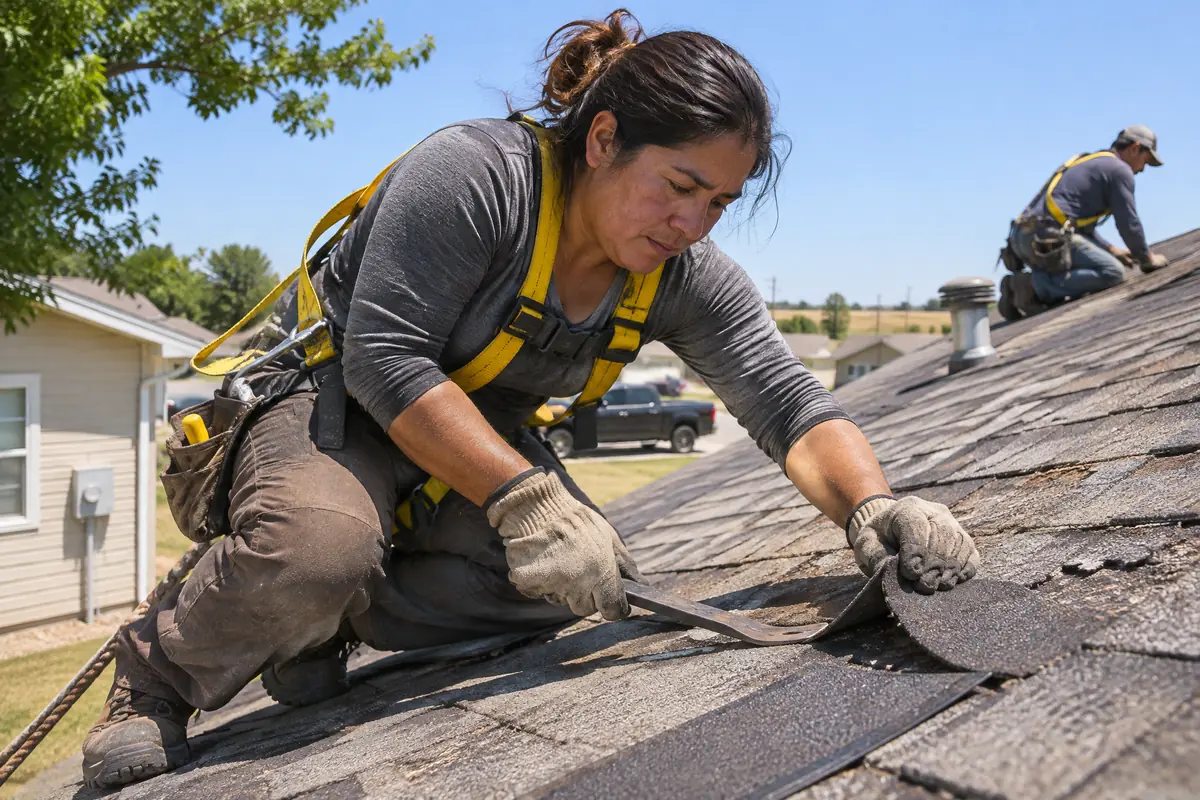
A repair fixes a defined problem on a roof that is otherwise sound. The roofer finds where water or wind is getting in, removes the failed material and replaces it so it sheds water the way the rest of the roof does. On most Wichita homes that means asphalt shingles, but the same thinking applies to metal panels, low-slope membranes and the flashing that ties the roof to walls and chimneys.
The most common repairs in the area are:
- Replacing shingles that blew off or creased in a wind storm.
- Resealing or replacing the rubber pipe boots around plumbing vents, which crack after years of UV exposure.
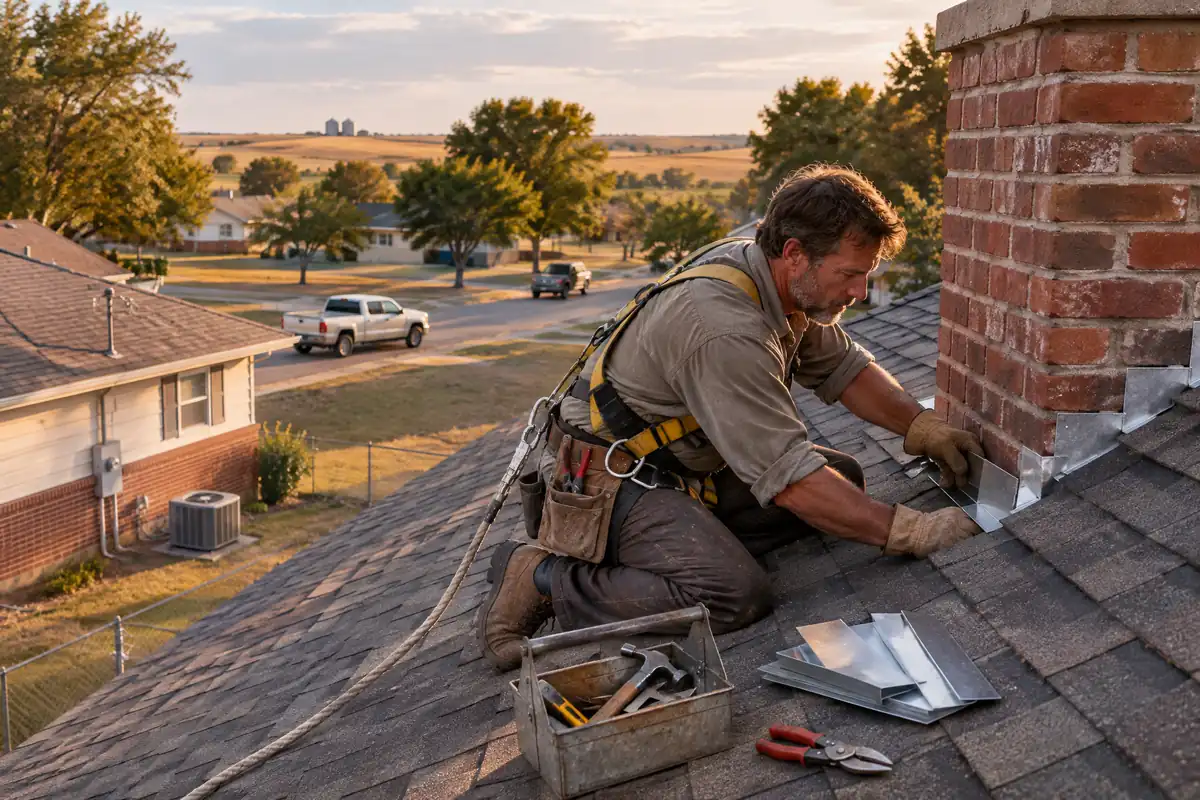
- Rebuilding step flashing and counter flashing where a roof meets a wall or chimney.
- Fixing valleys, where two roof slopes meet and carry the most water.
- Cutting out and replacing soft or rotted decking boards under a long-running leak.
- Securing ridge caps and roof vents loosened by wind.
What are the signs you need a roof repair?
Water stains on a ceiling are the obvious one, but they show up late. By the time a brown ring appears, water has usually been soaking insulation for a while. Earlier signs are easier to spot from the yard or the attic:
- Shingles lying in the grass, or bare patches where the darker underlayment shows through.
- Shingle tabs that lift or flap when the wind picks up.
- Daylight through the roof boards when you look from the attic with the lights off.
- Damp or darkened wood around attic nails after a rain.
- A musty smell in upstairs rooms, or peeling paint near the top of exterior walls.
- Piles of granules at the bottom of downspouts on a roof that is not brand new.
How is a roof repair done?
A good repair starts with finding the source, which is not always directly above the stain. Water can run along a rafter or the underside of the decking for several feet before it drips. The roofer will usually check the attic first, then the roof surface above it, looking at flashing, vents and any penetrations nearby.
Once the entry point is found, damaged shingles are lifted and removed without tearing the courses above them. Any wet or soft decking is cut back to solid wood. New underlayment goes down, then new shingles are nailed in a pattern that matches the manufacturer's instructions and sealed into the course above. Flashing is replaced rather than covered in caulk, because caulk alone tends to crack within a season or two of Kansas heat and cold.
What affects the cost and time of a roof repair?
No honest roofer can price a repair without seeing it, but these are the factors that move the number up or down:
| Factor | Lower cost | Higher cost |
|---|---|---|
| Roof pitch | Walkable, low to medium slope | Steep roof needing harnesses and roof jacks |
| Access | Single story, open yard | Two stories, fences, trees or tight side yards |
| Materials | Common asphalt shingle still in stock | Discontinued shingle, metal, tile or specialty flashing |
| Hidden damage | Leak caught early, dry decking | Rotted decking, wet insulation, mold |
| Timing | Scheduled weekday visit | Night or weekend emergency call after a storm |
If the roofer finds that the damage is spread across the roof, or that the shingles are near the end of their life, they may suggest replacing instead. Our repair or replace guide lays out how to weigh that choice.
What should you do before the roofer arrives?
- Move furniture and electronics away from the drip and put down a bucket and towels.
- If the ceiling is bulging with water, keep people out from under it. A roofer or restoration company can advise on draining it safely.
- Take photos of the stain, the attic and any shingles you find in the yard, with the date.
- Clear a path to the attic hatch and move cars away from the side of the house where the ladder will go.
- Stay off the roof. Wet shingles are slippery, and a fall does far more damage than a leak.
When is a roof repair an emergency?
Call for an urgent visit when water is actively coming through a light fixture or running down a wall, when a section of roof has been torn open by wind or a falling limb, or when a storm is forecast and you already know the roof is open. In those cases the first step is usually temporary protection, such as a tarp, with the permanent repair once the weather clears. Read more on our emergency roof repair page.
Questions people ask
How long does a typical roof repair take?
Most small repairs, such as replacing a handful of shingles or resealing a pipe boot, are done in a few hours. Repairs that involve cutting out rotten decking or rebuilding flashing around a chimney can take most of a day.
Can a roofer match my old shingles?
Often, but not always. Shingle lines get discontinued and colors fade in the Kansas sun, so a patch can look slightly different from the rest of the roof. Ask the roofer to show you the closest match before work starts.
Do I need a permit for a small roof repair in Wichita?
Small repairs are often exempt, but the rules depend on the size of the area and on your city. MABCD handles permits for Wichita and unincorporated Sedgwick County, while suburbs start at their own city office, so ask your roofer whether your job needs one.
Will my insurance pay for a roof repair?
It depends on the cause. Sudden damage from hail or wind is commonly covered, minus your deductible, while wear and age usually are not. Read your policy and ask your agent before filing.
Why does my roof leak only in some storms?
Wind direction matters. Rain driven sideways by a south wind can get under a lifted shingle or loose flashing that stays dry in a calm shower. Tell the roofer which storms cause the drip, because it helps them find the entry point.