
Few roofing decisions feel bigger than this one. A repair might cost a few hundred dollars. A replacement costs many times that. Get it wrong one way and you pay for a new roof you did not need. Get it wrong the other way and you pay for repairs on a roof that keeps failing, plus the water damage in between. This guide gives you a straightforward way to think it through, and the questions to ask a roofer before you choose.
What should drive the decision?
Five factors do most of the work.
1. How old is the roof?
Asphalt shingle roofs in Kansas face strong sun, hail, wind and freeze-thaw cycles, and many do not reach the lifespan printed on the bundle. If the roof is relatively young and in good shape, repairs make sense. As it nears the end of its life, each repair buys less time.
2. How widespread is the damage?
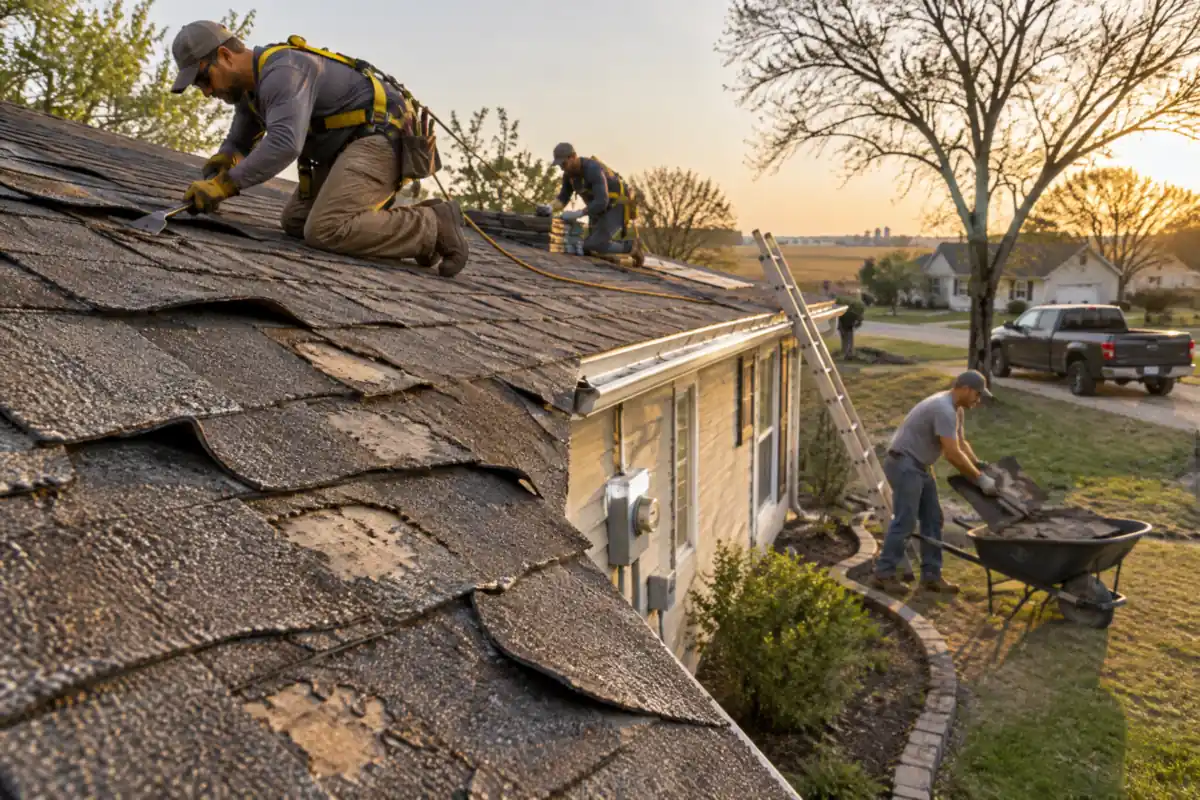
Damage limited to one area, such as a few missing shingles after wind or a failed pipe boot, is a repair. Hail damage spread across most slopes, or granule loss everywhere, points to replacement, because patching in new shingles does not fix the rest of the roof.
3. Are leaks coming back?
One leak with a clear cause is a repair. Leaks in several places, or the same leak returning after repairs, usually mean the roof system as a whole is failing.
4. What is the decking like?
If the roof feels spongy underfoot or sags between rafters, the decking may be damaged. Fixing decking properly means removing the roofing above it, which often makes a replacement the more practical choice.
5. What does your insurance cover?
If a storm caused the damage, your policy may pay for repairs or a replacement, minus your deductible. Wear and age generally are not covered. Our roof insurance claim guide explains how payouts usually work.
Repair or replace at a glance
| Situation | Usually repair | Usually replace |
|---|---|---|
| Roof age | Well within its expected life | Near or past the end of its life |
| Damage area | One spot or one slope | Most slopes |
| Shingle condition | Flat, granules intact elsewhere | Curling, cracking, bald patches everywhere |
| Leak history | First leak, clear cause | Repeated or multiple leaks |
| Decking | Solid | Soft, sagging or rotted in several areas |
| Layers | One layer, sound | Multiple old layers |
| Plans | Selling soon, roof sound | Staying long-term, or buyer inspection flagged the roof |
What does each option really cost?
Compare more than the price tag. A repair costs less now, but ask how many years it is likely to buy and whether more repairs are likely soon. A replacement costs more now, but resets the clock, often comes with new warranties, and can be an opportunity to upgrade to impact-resistant shingles or better ventilation. If you are likely to need a replacement within a few years anyway, spending heavily on repairs now may not be the best use of money.
Also think about what you cannot see. A leak that has been running for months may have soaked insulation or rotted decking. A repair that only addresses the shingles can leave that damage in place.
What should you ask the roofer?
- Can you show me photos of the damage on each slope?
- How many years do you think this repair will buy?
- Is the decking sound where you looked?
- How many layers of roofing are on the house now?
- If I repair now, what is likely to fail next?
- What would a replacement include, and what would it cost?
A good roofer will answer plainly and show you the evidence. If you are unsure, a second opinion is reasonable, especially for a full replacement. Make sure anyone you hire is registered with the Kansas Attorney General. Our registration guide shows how to check.
What about a partial replacement?
Sometimes one slope takes all the damage, such as the west side in a storm driven by a west wind. Replacing just that section can be a sensible middle ground if the rest of the roof is in good shape. The challenges are matching color and weathering, and blending the new and old shingles at the ridge and edges. Ask the roofer whether your shingle is still made and how the finished roof would look.
Where do you go from here?
Start with an inspection. With clear photos and an honest assessment, the right choice is usually obvious. If two roofers give you very different advice, ask each one to walk you through their photos slope by slope. The difference is usually in how much damage they think the shingles have, and photos settle that faster than opinions. See our roof repair and roof replacement pages for what each job involves.
Questions people ask
How old is too old for a roof repair?
There is no fixed age, but once asphalt shingles pass roughly 20 years, or show curling and heavy granule loss everywhere, repairs often buy little time. A roofer can judge how much life is left.
Can I replace just one side of my roof?
Sometimes. If one slope took all the damage and the rest is in good shape, a partial replacement can make sense. Matching color and blending at the ridge is the challenge, so ask to see how it would look.
Is it cheaper to repair now and replace later?
Often in the short term. Over time, repeated repairs on a failing roof can add up to more than a replacement, and leaks can damage decking and interiors. Compare the repair cost with how many years it buys.
Does insurance pay for a full replacement or just repairs?
That depends on the storm damage found and your policy. If damage covers most of the roof, adjusters often approve replacement. Wear and age are usually not covered.
How do I know a roofer is not just upselling a replacement?
Ask to see photos of each slope and the specific damage, and get a second opinion if unsure. A good roofer will explain why a repair would or would not last.