
Hail in Wichita often arrives fast and leaves the same way. Ten minutes of noise on the roof, then sunshine, then a neighbor's truck covered in dimples. In that first hour, most people want to know one thing: did the roof get hit? You can answer a lot of that without setting foot on a ladder. This guide walks through what to check, in what order, and what each sign means.
Step 1: Is it actually safe to go outside?
Wait until the storm cell has fully passed and you have not heard thunder for at least 30 minutes. Supercells that drop hail can also bring lightning, damaging wind and, sometimes, tornadoes. Watch for downed power lines and stay well clear of them. If a tree or limb is resting on the house, or you smell gas, leave the house and call 911 before anything else.
Step 2: How big was the hail?
If there are still hailstones on the ground, photograph a few next to a coin, a ruler or a credit card for scale. Size matters because it gives a rough idea of how hard the roof was hit. Hail around one inch, roughly quarter size, can damage older or brittle asphalt shingles. Golf ball size and larger can damage newer shingles too. Wind matters as well: wind-driven hail hits harder and at an angle, so the side of the house facing the storm usually takes the worst of it.
Also note the date and time the hail fell. If you file a claim, the insurer will want to match the damage to a specific storm, and weather services keep records of where hail was reported.
Step 3: What do the soft metals show?
Soft metals are the best evidence you can collect from the ground, because they dent where shingles only bruise. Walk around the house and look at:
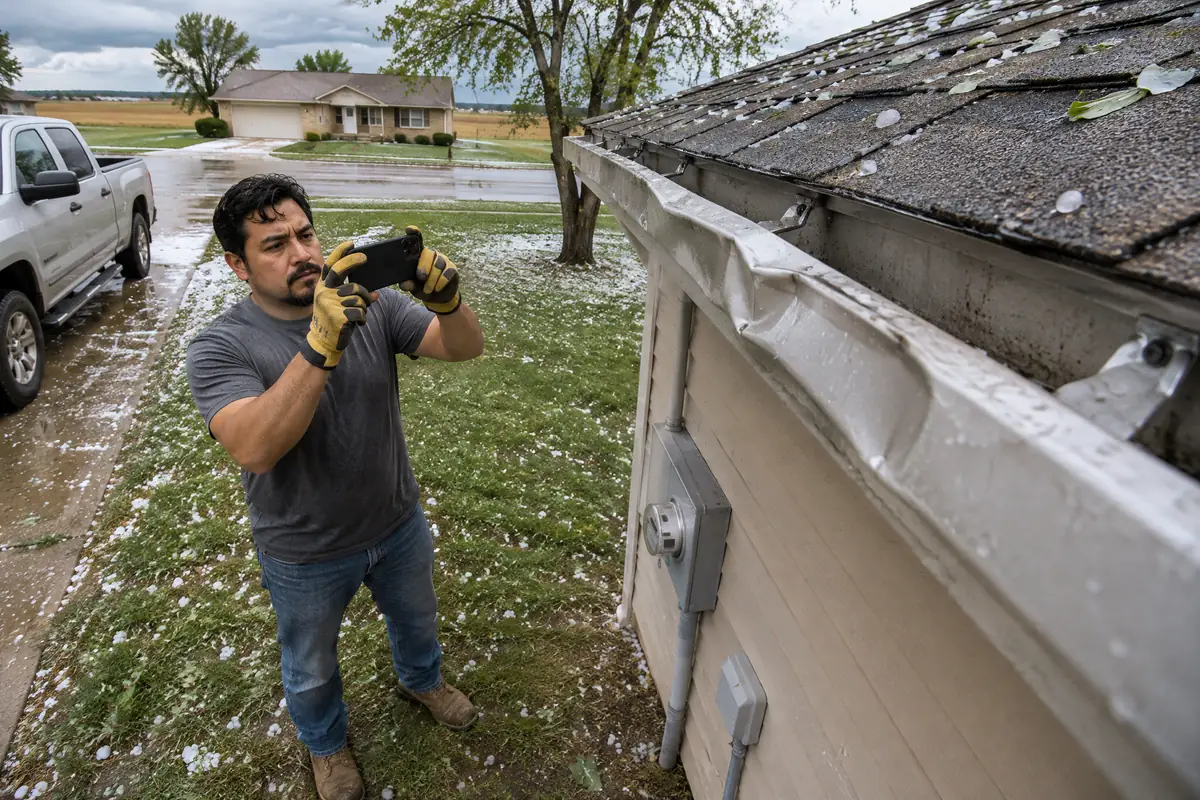
- Gutters and downspouts. Round dents along the top edge and face.
- Metal roof vents. Box vents, turbine vents and ridge vents show dents clearly, often visible from the yard with a phone zoom.
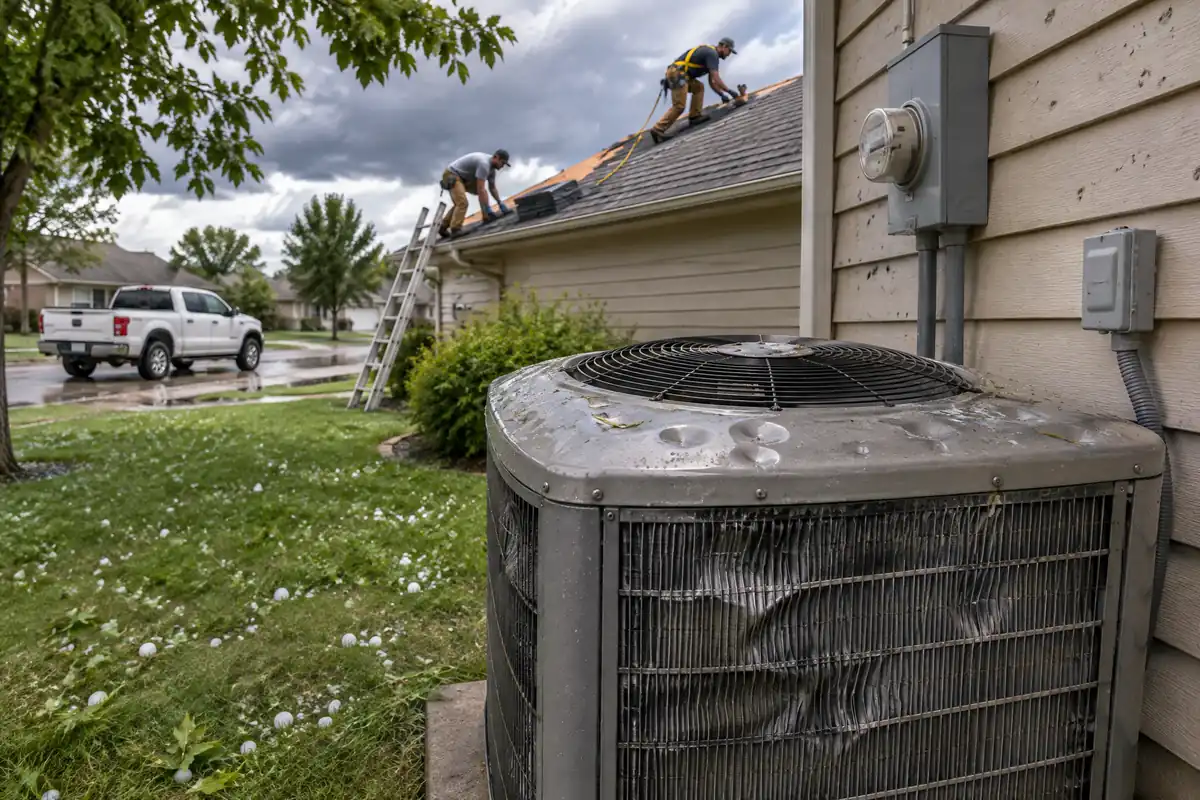
- Air conditioner condenser. Bent fins on the coil or dents on the top.
- Window screens and frames. Torn screens or chipped paint on the storm side.
- Mailbox, light fixtures and grills. Anything metal and exposed.
Photograph each dent, ideally with something for scale. Dents on several of these are a strong sign the roof deserves a closer look.
Step 4: What does the roof show from the ground?
Stand back far enough to see each slope. Use your phone's zoom or binoculars. You are looking for:
- Dark spots or patches where the colored granules have been knocked off.
- Missing, cracked or folded shingles.
- Shingle tabs lifted by wind.
- Broken or cracked skylights and plastic vent covers.
Then look down. Piles of granules at the bottom of downspouts, especially in larger amounts than usual, mean shingles lost their protective layer. Pieces of shingle, vent covers or ridge cap in the yard point to damage you might not see from below.
Step 5: What does the attic tell you?
If you can reach the attic safely, take a flashlight and look at the underside of the roof deck, especially around vents, chimneys and the side of the house that faced the storm. Damp wood, fresh water stains, drips or daylight through the boards all mean water got in. Check the ceilings in the rooms below too. Hail damage often does not leak right away, so a dry attic is good news but not proof the roof is undamaged.
What do your findings mean?
| What you found | What it suggests | Next step |
|---|---|---|
| No dents, no debris, small hail | Low chance of roof damage | Keep photos; recheck after the next storm |
| Dented gutters, vents or AC fins | Hail was strong enough to damage roofing | Book an inspection |
| Granule piles, shingle pieces in yard | Shingles were damaged | Book an inspection soon; notify insurer within your policy's time limit |
| Water in attic or ceilings | Roof is letting water in | Call for emergency repair or tarping |
| Hole in roof or broken skylight | Open roof | Emergency call now; protect belongings inside |
What should you do next?
If you found damage, or the hail was large, book a roof inspection. A roofer can walk the roof safely, mark and count hits, and photograph everything in a way an insurance adjuster expects to see. Tell your insurer about the loss within the time your policy requires, which varies, and keep your own dated photos with the roofer's report. Our Kansas roof insurance claim guide covers the claim process.
Be careful with anyone who knocks on your door right after the storm offering a free roof. Check that any roofer is registered with the Kansas Attorney General before you sign anything. Our registration guide shows how.
Why does this matter so much in Wichita?
Because hail is a near-annual event here. Severe storms caused $879 million in insurance claims across Kansas in 2025, according to the Kansas Insurance Department, and Sedgwick County accounted for $383 million of that. The early September 2025 storm brought hail up to 2.75 inches. Spotting and documenting damage early protects both your roof and your claim.
Questions people ask
Should I climb on my roof to check for hail damage?
No. Wet shingles, loose granules and storm debris make roofs slippery, and falls cause serious injuries. Everything in this checklist can be done from the ground or the attic. Leave the roof itself to a roofer with safety gear.
How long after a storm should I check?
As soon as the storm has passed and it is safe to go outside. Photos taken soon after the storm, with the date, are the most useful for any claim.
What if I cannot see any damage from the ground?
That does not mean there is none. Hail often bruises shingles or knocks off granules in ways you cannot see from below. If you found dents on gutters or vents, or the storm had large hail, a professional inspection is worthwhile.
Does a dented car mean my roof is damaged?
Not necessarily, but it is a strong hint. If hail was large enough to dent a car, it was likely large enough to damage at least some shingles, especially on older roofs.
Can I save hailstones as evidence?
Yes. Photograph them beside a coin or ruler for scale. You can put a few in the freezer if you like, but dated photos are what most people rely on.