
Bel Aire started out as a water project. In January 1955, residents on the northeastern edge of Wichita petitioned the county to form an improvement district so they could build a water system. A quarter century later they went further. On November 26, 1980, Bel Aire incorporated as a city after a two-year legal fight with Wichita that ended at the Kansas Supreme Court, which ruled in Bel Aire's favor. The city sits on the north side of the East Fork of Chisholm Creek, south of K-254, with Wichita to the south and west and Kechi to the north.
What kinds of roofs does Bel Aire have?
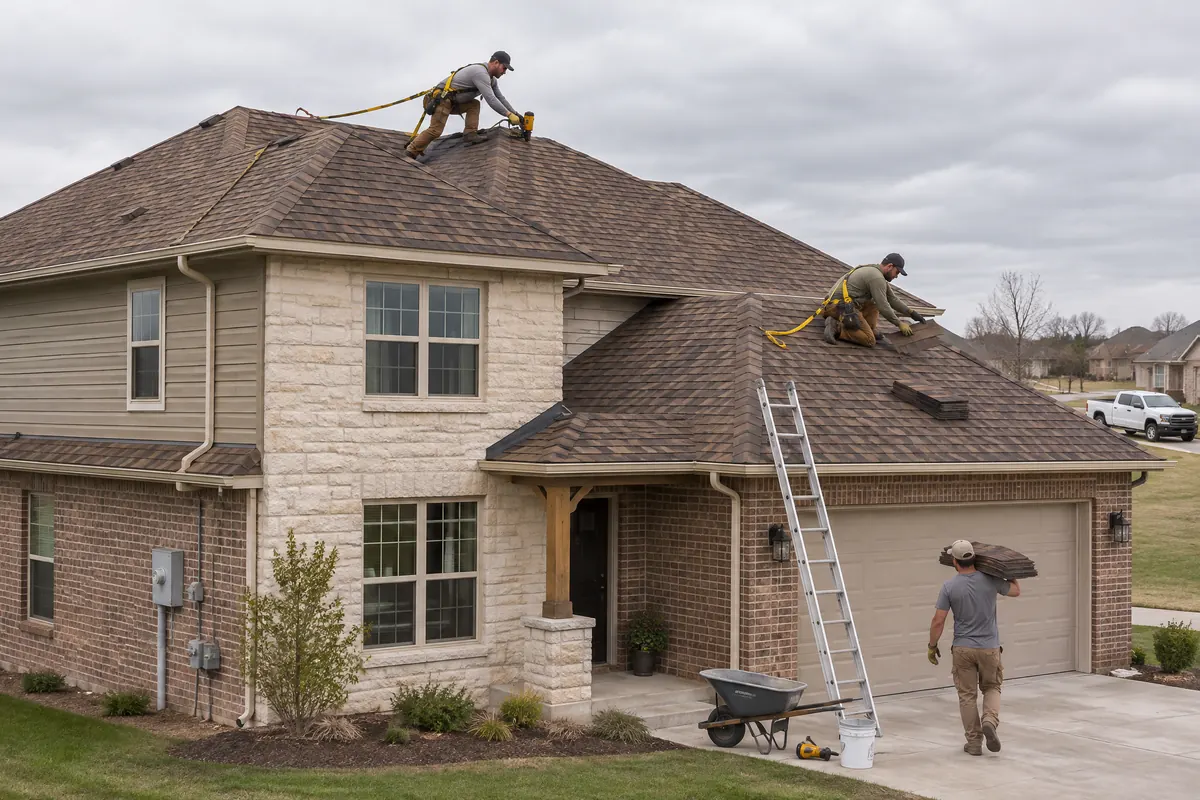
Two very different groups. On the south side, established neighborhoods have mid-century ranch and split-level homes with simple gable roofs, many on their third or fourth roof by now. Further north, Bel Aire has been one of the faster-growing parts of the metro, with new subdivisions, spec homes and custom builds. Those newer homes tend to have larger, more complex hip roofs with many ridges, valleys and roof-to-wall connections.
The population tells the story. Bel Aire counted 8,262 people at the 2020 census, and Census estimates put it past 10,000 by 2024.
What should owners of newer Bel Aire homes watch for?
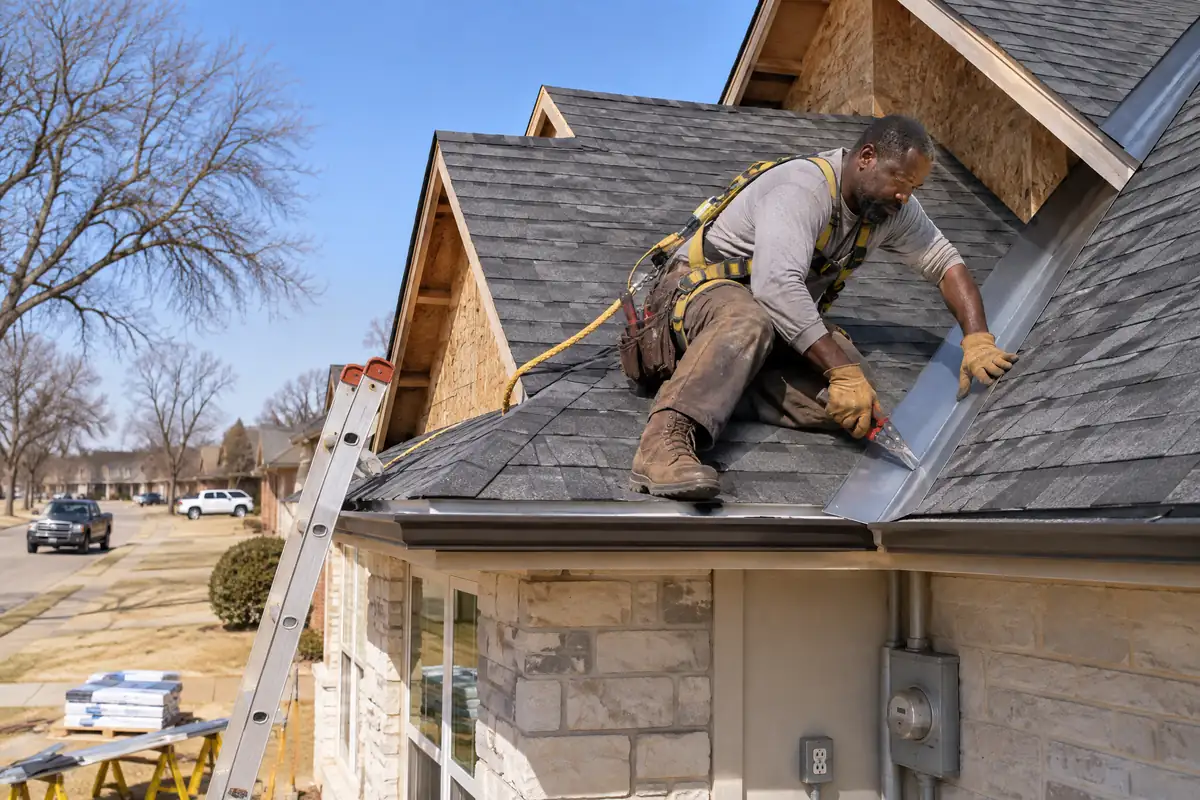
- Valley and step-flashing details on complex roofs, which are where leaks usually start.
- Builder-grade shingles that may not stand up well to large hail.
- Attic ventilation, since big hip roofs can be hard to vent well.
- Gutter capacity, because large roof areas send a lot of water to each downspout.
What about the older south-side homes?
Mid-century homes are usually simple to reroof, but they often hide older problems. Look for plank decking under the shingles, past layers that were never removed, undersized gutters and old aluminum flashing at chimneys. When you get a replacement quote, check that it includes a per-sheet price for any decking repairs so there are no surprises on tear-off day.
How do storms affect Bel Aire?
Storms moving northeast across Wichita often cross Bel Aire on their way toward Butler County. Hail is the main risk, along with wind that lifts shingles on the open edges of new developments. After any big storm, check gutters, vents and AC fins for dents, and look for shingle debris. Our after-hail checklist covers what to look for safely.
How do permits work in Bel Aire?
Bel Aire's Building and Zoning office handles permits for the city. Your roofer should pull the permit, and must hold a Kansas roofing registration from the Attorney General, which you can check online. See our registration guide.
Questions people ask
Who issues roofing permits in Bel Aire?
Bel Aire's Building and Zoning office handles permitting. The permit starts with the city, so your roofer should apply there.
My Bel Aire home is only a few years old. Can it have hail damage?
Yes. New roofs are often a standard architectural shingle that can bruise or lose granules in larger hail. Newer homes also tend to have complex hip roofs with many ridges and valleys to inspect.
Does my builder's warranty cover the roof?
Builder warranties usually cover workmanship defects for a limited time, not storm damage. Storm damage is normally a homeowner's insurance matter. Check your warranty documents.
Can I upgrade to impact-rated shingles when replacing?
Usually, yes. Many Bel Aire owners consider Class 4 shingles after a hail claim. Ask your insurer about possible discounts before choosing.