
What storm history does Wellington carry?
On May 27, 1892, a tornado estimated at F4 strength struck Wellington, destroying 100 homes and 30 businesses and killing 12 people in town. The town had just gone through a growth spurt as the cattle drives ended and the big wheat harvests began, and the storm set that growth back for years. More than a century later, on May 3, 1999, the tornado that went on to devastate Haysville touched down about 4 miles north of Wellington.
Those events are rare. Hail and straight-line wind are not, and Sumner County's flat, open wheat country gives storms plenty of room to build before they reach town.
What kinds of roofs are in Wellington?
Wellington was platted in 1871, named after the Duke of Wellington, and became the Sumner County seat in 1872. The Downtown Wellington Historic District preserves brick commercial buildings from the railroad era, when both the Santa Fe and the Rock Island served the town. Many of those buildings have low-slope roofs hidden behind parapet walls. Residential streets around downtown have older two-story homes and bungalows, with mid-century ranches and newer homes further out. The town calls itself the Wheat Capital of the World, and the countryside around it is full of grain bins, barns and metal machine sheds.
Which roofing jobs come up most in Wellington?
| Property | Common problem | Typical work |
|---|---|---|
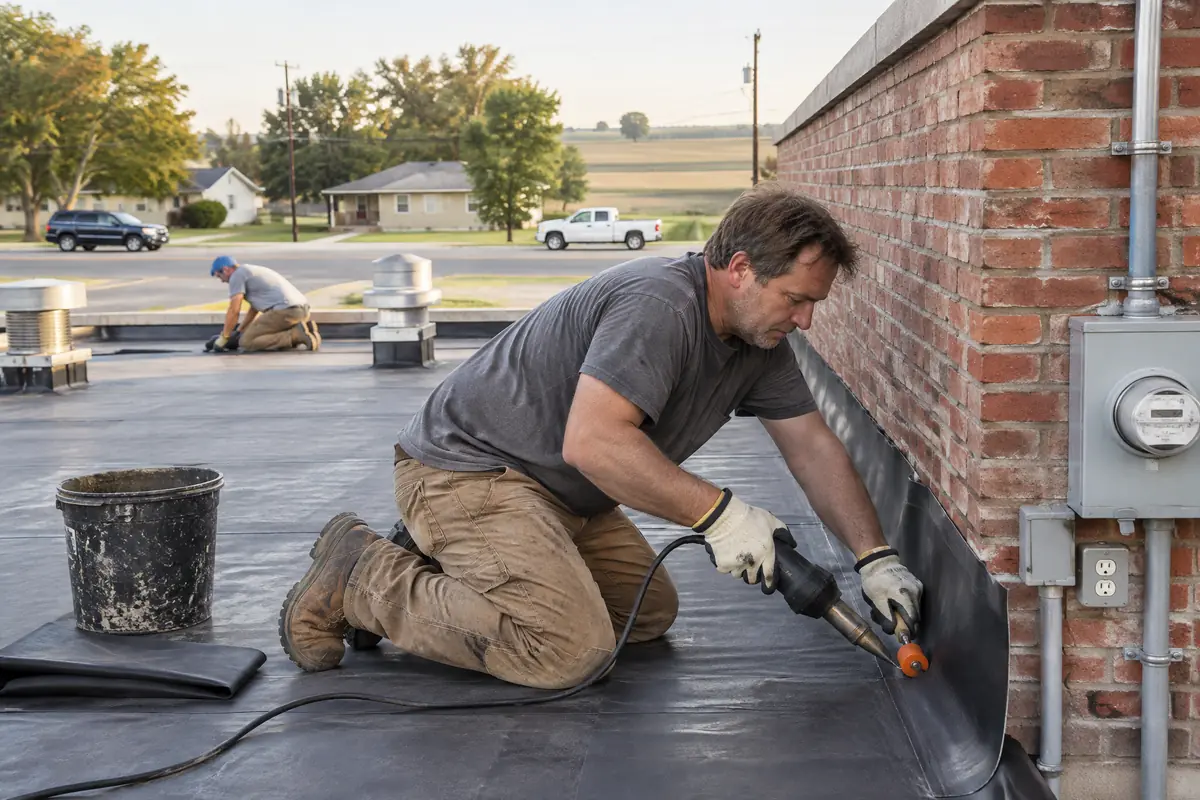
| Downtown brick building | Ponding water, failed parapet flashing | Membrane repair or replacement, new flashing, drainage fixes |
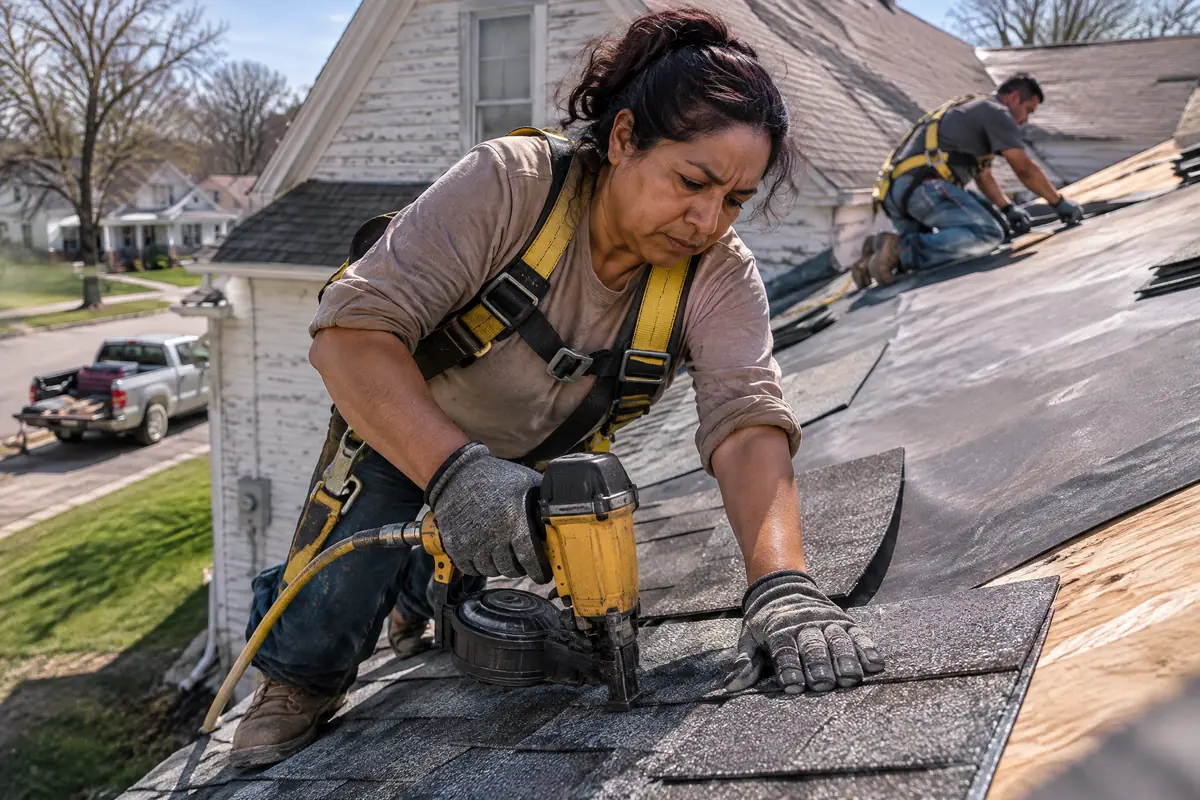
| Older home near downtown | Worn shingles, chimney leaks, several layers | Tear-off and reroof, flashing rebuild |
| Mid-century or newer home | Hail bruising, wind-lifted shingles | Inspection, repair or replacement |
| Farm shop or barn | Loose screws, lifted metal panels | Fastener replacement, panel resecuring |
How do permits work around Wellington?
Inside city limits, permits go through the City of Wellington. Out in the county, Sumner County's Planning, Zoning and Environmental Health office handles permitting. Your roofer should know which applies to your address. Either way, the roofer must be registered with the Kansas Attorney General, which you can confirm online. See our registration guide.
What should you check after a storm in Wellington?
Walk the property once the storm has passed and photograph dents in gutters, vents and AC units, shingle pieces in the yard and any damage to outbuildings. Check ceilings and the attic. If you see damage, call for an inspection promptly so it is documented close to the storm date.
Questions people ask
Who issues roofing permits in Wellington?
The City of Wellington handles its own building permits. Rural Sumner County properties go through the county's Planning and Zoning office. Your roofer should know which applies.
Can roofers work on historic downtown buildings?
Yes, though flat roofs behind parapets need membrane experience, and properties in the historic district may have extra review for visible changes. Ask the roofer about both.
Is Wellington too far for Wichita-area roofers?
Wellington is about 32 miles south of Wichita, and roofers commonly work across Sumner County. You are connected with a participating provider who covers your area.
Do farm buildings near Wellington need roof checks after storms?
Yes. Metal barn and shop roofs can lift at the edges in strong wind. Check fasteners and trim after big storms.